
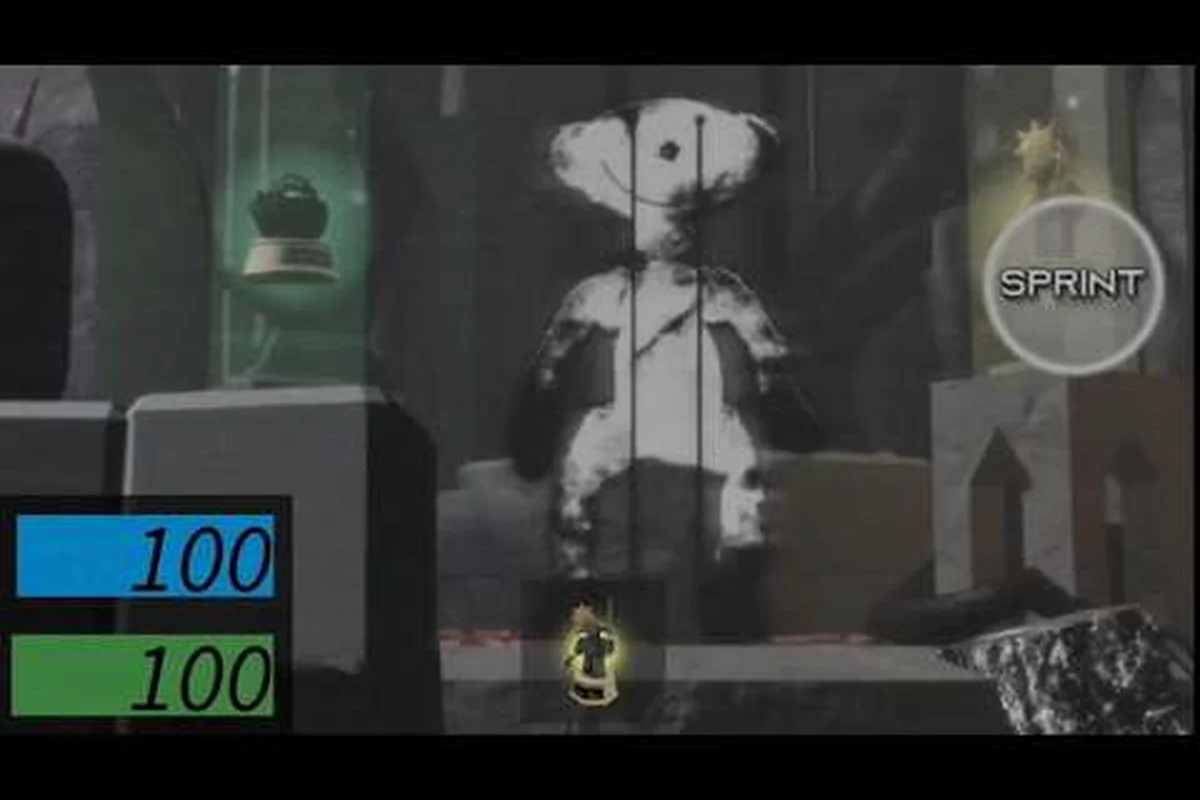
BEAR bear alpha chase mechanics decide whether a survivor escapes or the Monstrosity closes the hunt. Bear alpha sound awareness reacts to sprinting, breaking objects, and vocal cues, so survivors should avoid noisy routes when the alpha is nearby. Bear alpha sightline mechanics favor attacks from clear frontal angles rather than blindside movement, while stamina management limits long-distance pursuit. Because the bear can outpace survivors during an active chase, a successful escape often depends on breaking line of sight, recovering stamina behind cover, and using the bear alpha respawn rules to reset the encounter safely.
Bear Alpha Chase Mechanics: The Core Survival Loop
BEAR (Alpha) is built around asymmetric pressure: the Monstrosity hunts multiple survivors, while survivors must complete objectives and preserve enough stamina to react. Community reports indicate that the Monstrosity cannot be damaged, can outrun a walking survivor, and deals permanent damage, while survivors face rapid stamina drain. Because those details shape the entire match, understanding the chase starts with identifying the five systems that matter most.
| Chase system | What the player experiences | Practical consequence |
|---|---|---|
| Sound awareness | Footsteps, breathing, and environmental noise can reveal a direction | Stop moving and listen before committing to a route |
| Sightline mechanics | Open areas expose movement, while cover and corners interrupt observation | Use corners and controlled peeks rather than crossing exposed ground |
| Speed difference | The Monstrosity can close on a survivor who is only walking | A survivor needs distance, obstacles, or a stamina burst |
| Damage pressure | Survivors reportedly sustain permanent damage after contact | Avoid trading hits and preserve health for late objectives |
| Respawn rules | Dead survivors may return on a delay while the round continues | A rescue attempt depends on timing, cover, and the hunter’s position |
The practical loop is simple: survivors gather information, move only when the route is safe, preserve stamina, and use the environment to break the Monstrosity’s line. The bear follows the same logic from the other side, reading cues, controlling open space, and choosing when to pressure a target instead of blindly chasing every noise.
A useful starting point is the game’s broader community footage, such as the Tears Before Bedtime chase. It is useful for observing chase flow, but it should be treated as player-reported evidence rather than an official rules reference. The footage can show how objectives, stamina, and pursuit interact in practice without presenting every number as guaranteed or permanent.
What the Chase Rewards
The strongest players treat the chase as an information problem. A survivor who merely runs will eventually run out of stamina, while a bear who chases every sound will lose time on empty routes. Good decisions come from asking three questions: What did the player hear? What can the bear see? And where does the survivor still have room to run?
| Player role | Main objective | Best information to track | Common mistake |
|---|---|---|---|
| Survivor | Complete objectives and escape the hunt | Bear noise, visible movement, nearby cover | Running through an open space without a route |
| Monstrosity | Catch survivors and prevent successful escape | Objective progress, directional cues, sightline breaks | Following a stale noise instead of the live player |
These priorities make the chase mechanics more than a test of movement speed. Positioning, timing, and the ability to create uncertainty often matter more than a single sprint. A survivor who forces the bear to search, circle, or cross a dangerous area can gain more value than one who only increases distance.
Bear Alpha Sound Awareness: Hearing the Hunt
Sound is one of the most important layers of BEAR’s pursuit. Player reports describe the Monstrosity as capable of tracking movement, while survivors can use the environment to create distractions and break the hunter’s expectation. Because there is no official wiki documenting every audio cue, players should treat sounds as practical signals rather than exact radar readings.
Useful sounds include movement from another survivor, a sprint that carries farther than ordinary walking, interaction sounds near an objective, and silence after a player has stopped moving. The most important part is not identifying every individual noise, but recognizing when the soundscape has changed. A sudden absence of footsteps can mean a survivor is hiding; a repeated noise can indicate a decoy or a player working an objective.
Reading Direction and Distance
Direction is often more useful than precise distance. When a survivor hears a heavy step or other Monstrosity cue, the first response should be to orient the camera without immediately sprinting. Turning toward the threat lets the player choose a route before committing, while blindly running can send them toward a dead end.
| Cue | Likely reading | Safer response |
|---|---|---|
| Footsteps close behind | The bear may have direct contact range | Move around a corner, use a quick stamina burst, and avoid a straight retreat |
| Footsteps to one side | The bear may be approaching from an angle | Check the perpendicular route and preserve an escape line |
| Objective noise | A survivor may be completing a task | Circle toward the objective only after confirming the hunter’s position |
| Repeated sound | A player could be looping, hiding, or using a distraction | Change direction before the bear commits to the same route |
Sound awareness also works for the bear. The Monstrosity should treat isolated noise as a lead, not a confirmed target. Moving toward it can still be useful because it narrows the survivor’s options, but a bear that abandons a strong position for every distant noise loses the pressure that makes the chase feel dangerous.
The same principle applies to survivors. A sound made by another teammate can reveal a third party’s location, but it can also pull the bear toward an objective. Players who understand this can choose whether an objective is worth the attention it creates. The detailed survivor crouch and stealth guide explains how quieter movement can help preserve that advantage.
Sound Discipline Checklist
Before making a noisy move, assess the bear alpha’s likely position using both sightline and sound awareness, then account for the chase’s speed difference rather than assuming a straight sprint will win. For example, if you hear the bear alpha’s footsteps behind a doorway, move away from the open sightline and use the doorframe to break its committed pursuit; if the sounds stop, treat that silence as a possible alpha pause rather than proof that it has disengaged.
-
Pause before interaction: Stop moving when an objective sound may expose your position.
-
Alternate sprinting: Do not hold one direction for the entire escape; turns can break a committed pursuit.
-
Use surfaces and rooms: Corners, doorways, and changes in elevation can interrupt the bear’s approach.
-
Listen after stopping: The silence often reveals whether the bear kept moving or also stopped.
-
Do not trust one cue: Footsteps can be confused with environmental sounds, so confirm with sight before turning.
Bear Alpha Sightline Mechanics: Winning Through Visibility
Sightlines determine how much of the map a player can control. A straight hallway rewards the player with long visibility but also gives the Monstrosity an equally long approach. An open courtyard can be worse because there may be fewer places to break contact. The strongest survivor routes combine moderate visibility with several exits, while the bear favors angles that overlap multiple exits.
The key principle is shared information. If both the survivor and the Monstrosity can see the same corner, the survivor loses the ability to surprise the bear. If the survivor can observe the bear while remaining behind cover, they gain time to decide whether to run, hide, or complete an objective.
Visibility Versus Cover
| Environment | Survival value | Bear value | Best tactic |
|---|---|---|---|
| Open map | Low immediate cover | Excellent pursuit and visibility | Cross only when the route ahead is clear |
| Narrow corridor | Strong break opportunity | Strong choke-point pressure | Turn at the far end instead of running straight |
| Dense room cluster | Many hiding and flanking options | Higher chance of losing the target | Move room to room and check entrances |
| Open edges | Fast travel but poor cover | Good interception points | Use them briefly and reach interior cover |
| Hiding location | Temporary concealment | Easy to check if suspected | Pair hiding with a route change, not a stationary wait |
A survivor should watch where the bear stands relative to the objective. If the bear can see the exit, hiding beside the task may only delay capture. Moving to another side can force the hunter to reposition, while a well-timed objective interaction can redirect attention. This is especially important when multiple survivors are split across the map, since the bear can only visibly pressure one area at a time.
The bear’s sightline strategy is different. Instead of walking directly toward a survivor’s last known position, the hunter can aim toward the escape route. Looking at a corridor’s far end may be more valuable than staring at a nearby doorway because it reveals where a fleeing survivor must go. When possible, take the high-information angle first and save the direct approach for second.
Sightline Discipline
-
Survivors: Pause before crossing an intersection or exposed doorway.
-
Bear: Watch escape lanes, not only the target’s current location.
-
Both roles: Expect the other player to use sound, distance, and corners together.
-
Open maps: Keep moving toward a break in the hunter’s angle rather than trying to outrun it indefinitely.
-
Objective areas: Check behind and beside the task because an approaching survivor may be using cover.
Bear Alpha Speed Difference: Managing the Chase
The reported speed difference is central to the pursuit. The Monstrosity can outrun a walking survivor, and survivors reportedly suffer rapid stamina drain. That creates a simple but demanding rule: distance is temporary unless the survivor uses it to change the chase conditions. A straight sprint is not a complete strategy.
Stamina is the survivor’s most valuable resource because it enables bursts, reactions, and route changes. Spent at the wrong moment, it leaves the player exposed in open space. The bear, by contrast, wants to convert the survivor’s low stamina into a predictable route and capture.
| Moment | Survivor’s best choice | Bear’s best choice |
|---|---|---|
| Bear is far away | Move economically and preserve stamina | Close distance through the shortest safe route |
| Bear is in sight | Break the line and turn across the route | Take the angle toward the survivor’s exit |
| Survivor stamina is low | Reach cover and hide or reset | Predict the nearest open route |
| Bear has overcommitted | Change direction or cross a doorway | Correct quickly without repeating the same line |
| Objective is exposed | Delay the interaction if possible | Camp the approach and force a reveal |
Spend Stamina on Information
A successful burst should buy more than a few meters. Use it to cross from one safe zone to another, pass a corner, or reach an alternate exit before the bear closes the angle. Sprinting in a circle without changing the relationship between both players usually wastes stamina and gives the bear an easier chase.
Survivors should also avoid running through the bear’s likely intercept point. A direct retreat may be correct for a few seconds, but a sharp lateral move can send the player toward a different room or objective. The BEAR flashlight mechanic overview also covers survival-state considerations that can influence whether it is safe to move openly.
The Monstrosity should manage pressure instead of chasing every individual movement. If a survivor is far away and quiet, the bear may gain more by cutting across the map. If the target is close, maintaining visual pressure may prevent a turn. The bear hunt strategy guide expands on movement and ability choices for players who want to specialize in the Monstrosity role.
A Repeatable Escape Sequence
-
Identify the threat: Confirm the bear’s direction through sound or sight.
-
Choose an exit: Select a route with cover, not merely the fastest straight line.
-
Spend stamina once: Burst toward the next safe zone.
-
Break the sightline: Turn, enter a room, or use a corner.
-
Reassess: Listen and look before moving again.
-
Resume objectives: Return to the task only after the immediate threat has weakened.
Bear Alpha How to Win as Survivor: Objective Discipline and Positioning
Survivors win by completing their required objectives or surviving the relevant round condition, not by damaging the Monstrosity. Community discussion indicates that the hunter cannot be damaged, so attacking is usually a distraction that costs health and stamina. A survivor who avoids damage preserves the resources needed for objectives and later escapes.
The best survivor strategy combines objective access, route diversity, and stamina control. If every survivor follows the same path, the bear can learn the route and intercept it. If the team works separate sides, the bear must choose which side to pressure, creating openings for the other team.
Pre-Round Planning
Before the chase begins, identify where objectives can be completed and which routes connect them. Avoid clustering around a single task, because one bear approach can then pressure multiple survivors. A flexible plan should assign a primary objective, a backup task, and an escape direction for each area.
| Objective situation | Recommended approach | Reason |
|---|---|---|
| Task in open space | Wait for the bear to move or approach from cover | Reduces exposure during the interaction |
| Task near several corridors | Alternate entrances as the bear shifts | Prevents one predictable approach |
| Task beside a hiding location | Use cover as a staging point, then leave | Prevents a trapped interaction |
| Task already being completed | Avoid stacking on the same worker | Spreads pressure across the team |
| Last objective available | Make it the focus before overextending | Progress matters more than extra wandering |
The bear alpha respawn rules also affect this planning. Based on community reports, dead survivors may return after a delay while the match continues. That creates a potential comeback opportunity, but it should not be treated as a guaranteed second life under every current version. The practical approach is to preserve health, know when a teammate is down, and avoid presenting the respawning survivor with an easy second capture.
Keep Options Open
A survivor should avoid ending a chase in a corner with only one exit. Even when the bear is not visible, the possibility of pursuit affects every movement decision. This means favoring doors, staggered paths, and objectives with multiple approaches. The repair-objectives guide offers a closer look at how task choices and escape conditions interact.
The bear ambush counterplay guide is also relevant when the bear predicts a survivor’s usual route. In that situation, the survivor must break the pattern rather than simply run faster. Moving to a different task or approach can force the Monstrosity to abandon a prepared ambush.
Bear Alpha How to Win as Bear: Hunt Control and Pressure
The Monstrosity wins by catching survivors and preventing their objectives from reaching completion. Because the bear is faster than a walking survivor and cannot be damaged, its strongest advantage is positional pressure. A direct sprint only helps if it ends with the survivor trapped or forced into the bear’s path.
A good hunt has three stages: locate the target, reduce its options, and commit at close range. The bear should constantly think about where the survivor must go, not only where the survivor is standing. This is the practical meaning of the chase mechanics for the aggressive role.
Hunt Priorities
| Hunt stage | Bear action | Survivor pressure created |
|---|---|---|
| Locate | Check objective noise and directional cues | Fear of beginning an interaction |
| Intercept | Move toward a likely exit or side route | Loss of a safe crossing point |
| Isolate | Cut off one path while watching another | Forced movement or hiding |
| Commit | Close when the survivor is exposed | Stamina drain and possible damage |
| Re-acquire | Check nearby cover after a broken chase | Anxiety and delayed objective work |
The Monstrosity gains value from threatening more than one route. If the survivor believes the bear is at one entrance, the bear can appear at another and force an immediate decision. This is more effective than endlessly chasing a target through an open area because it turns speed into control.
Community information about the bear alpha respawn rules should still be treated cautiously. Because current-game behavior can change with updates and platform versions, players should confirm the actual timing in each match. The available community footage, including a player-run chase clip, can illustrate pursuit patterns, but it should not substitute for live testing of current rules.
Keep the Bear’s Options Broad
Do not commit every second of the round to one survivor. If a target hides or turns well, move toward the nearest objective noise or plausible escape route. This keeps pressure distributed and prevents the bear from spending the entire match behind cover where a fast survivor can recover.
The bear should also vary its approach after a failed chase. If one route failed, try the side entrance or approach the objective from another direction. Repetition gives survivors time to memorize the pattern. Change the speed of engagement as well: sometimes control the exit, and sometimes commit directly when the target has no stamina or cover.
Match-Specific Decision Framework
The best decision depends on the match state rather than a universal rule. For example, a survivor who hears Bear Alpha moving nearby should test the sound with a short reposition before committing to a route, while a bear with only a distant audio cue should close through patrolable space without assuming the survivor’s exact location. Sound awareness, sightline control, stamina, objective progress, and respawn timing must be weighted together: each cue changes both players’ risk, so the following framework shows how the information shifts the preferred action for each role.
| Match state | Survivor decision | Bear decision |
|---|---|---|
| No visible or audible bear | Work an objective but keep movement economical | Patrol objectives and listen for interaction cues |
| Bear visible in open space | Turn toward cover and use a measured burst | Cut toward the likely exit |
| Bear visible near a corner | Hold the turn and let the bear approach | Approach slowly enough to control the corner |
| Sound only, no visual contact | Pause and test the direction | Reposition toward the sound without overcommitting |
| Low stamina and visible bear | Reach the closest safe hiding place or route change | Predict the open route and close |
| Objective nearly complete | Finish quickly unless the bear is in position | Interrupt before the completion is safe |
| Survivor down and respawn pending | Avoid presenting an easy landing zone | Continue controlling objectives rather than camping blindly |
This decision framework prevents two common errors. Survivors sometimes overinterpret an unclear sound and run into the bear’s sightline. Bears sometimes interpret every sound as a precise player location and lose valuable time. Treating each cue as information with a confidence level creates more reliable decisions.
Check the Version Before Relying on Fine Details
BEAR (Alpha) currently lacks a comprehensive official wiki, and community descriptions can become outdated after balance changes. Core community reports should be treated as as of October 31, 2026, while exact respawn timing, stamina values, and damage details may vary by platform or current patch. Players should verify behavior in the current game and adjust the framework if testing shows a change.
That caution does not make the chase less learnable. The broad relationships remain actionable: sound reveals information, sightlines control information, the speed difference punishes passive running, and objectives create the pressure that connects every role. The exact numbers are less important than recognizing those relationships under pressure.
Frequently Asked Questions
Can the Monstrosity be damaged in BEAR (Alpha)?
Community reports say the Monstrosity cannot be damaged, so survivors should avoid wasting stamina or health on ineffective attacks. Damage also appears to be permanent according to player discussions, making prevention the safest approach. If a survivor is struck, disengage, regain distance, and use cover rather than trying to trade damage. Confirm current behavior in the live version because balance changes may alter the result.
How does sound awareness affect a bear alpha chase?
Sound helps both roles locate and predict movement. Survivors can use quieter movement, changing direction, and environmental distractions to reduce the bear’s certainty, while the Monstrosity can track footsteps or objective interactions. The most useful cue usually indicates direction rather than an exact position, so players should pause briefly to verify it before committing to a route.
What is the safest way to escape the Monstrosity in BEAR?
The safest escape combines a change of direction with cover rather than a continuous sprint. Use a stamina burst to reach a corner or room, break the bear’s sightline, then listen before moving again. If the bear is visible in open space, prioritize route control over raw distance because the reported speed difference makes a straight retreat difficult.
Do dead survivors respawn during a BEAR (Alpha) match?
According to community reports, dead survivors may return after a delay while the round continues, but exact bear alpha respawn rules may change with platform or patch updates. Survivors should treat respawning as a possible comeback rather than a guaranteed reset. Their best defense is to avoid capture, preserve the health needed for another encounter, and stay away from obvious traps when returning.
How should the bear catch a survivor who keeps breaking sightlines?
The bear should stop chasing only the survivor’s current position and start controlling likely exits. Watching corridors, objective entrances, and routes between rooms makes juking less effective. If the survivor breaks contact, listen and reposition rather than running straight into the same hiding place, because varied approaches preserve the Monstrosity’s speed advantage and map pressure.