
Learning bear alpha for beginners starts with simple decisions that keep every round manageable: where to move, when to hide, and which objectives deserve attention first. This beginner guide for 2026 turns those fundamentals into a practical routine for surviving The Hollow and building useful rewards.
Bear Alpha Basics Every Beginner Should Learn
BEAR (Alpha) puts you in a dangerous forest where awareness matters more than reckless speed. A new survivor should begin by learning the route between useful landmarks, controlling the flashlight, and recognizing when the Bear has already moved into your area. These habits create more opportunities than trying to solve every objective immediately.
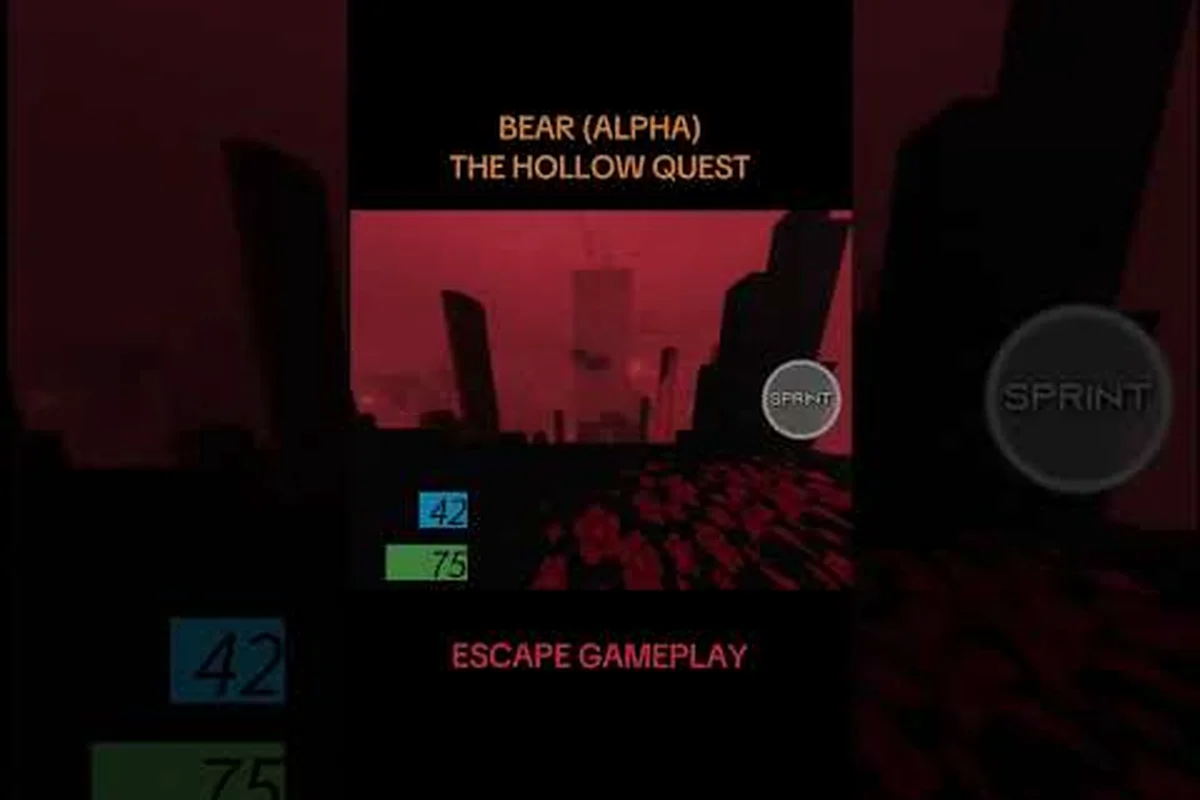
Community reports describe three recurring priorities for new players: survive the opening phase, complete a manageable objective, and preserve enough resources to return safely. Player-made walkthroughs such as this Hollow quest video by Dexs also emphasize breaking line of sight, using the flashlight deliberately, and choosing escape routes before the Bear closes the distance.
The Basic Round Sequence
A reliable round follows a simple sequence: secure the opening area first, because unknown noise can pull you into a dead end before your flashlight, inventory space, or escape route is ready. Use the map and recognizable landmarks to orient yourself, then treat every audible interaction as a decision point rather than an automatic objective. In BEAR, learning the opening area reduces wasted movement, while controlling the flashlight limits visual exposure and helps you return safely when the risk timer rises.
-
Arrive and identify nearby landmarks.
-
Listen and look for movement without exposing yourself.
-
Collect one necessary objective or supply.
-
Leave the area before remaining in place becomes risky.
-
Return to a safer location and evaluate your remaining needs.
| Priority | Beginner action | Why it helps | Common mistake |
|---|---|---|---|
| First | Learn the opening area | Reduces wasted movement | Running toward unknown sounds |
| Second | Keep the flashlight controlled | Limits visual exposure | Leaving it on continuously |
| Third | Complete one clear objective | Builds useful progress | Chasing several tasks at once |
| Fourth | Secure an escape route | Creates time to react | Moving into a dead end |
| Fifth | Return before risk rises | Improves survival odds | Delaying extraction too long |
Reading the Environment
A strong beginner treats environmental clues as a continuous information source. Footsteps, distant movement, changing light, and the position of usable structures can reveal whether danger is close or merely nearby. The objective is not to identify every sound with certainty; it is to choose a safer direction when evidence is incomplete.
The flashlight discipline rule is particularly important. A light can expose your position, but turning it off also removes one of your tools for checking corners and watching the ground. New players should switch it off when moving toward a suspicious noise, then use brief bursts of light when they need visual confirmation.
| Situation | Recommended response | Reason |
|---|---|---|
| Clear path and no nearby movement | Move steadily with the light available | Travel is faster without constant caution |
| Unfamiliar corridor or landmark | Look first, then advance | A quick check can prevent a blind encounter |
| Footsteps close to your route | Stop, listen, and change position | Silence may reveal a safer path |
| Sound behind you | Break line of sight immediately | Reduces the chance of a direct chase |
| Objective visible in the open | Approach only after checking both sides | Visible items can conceal a threat |
For a broader look at progression, the full BEAR Alpha guide can help you connect these first-session habits with longer-term play. The most important thing is to build a routine you can repeat under pressure rather than memorizing isolated tricks.
Bear Alpha Movement and Survival Tactics
Movement determines how much control you retain in a round. New players often move too cautiously in empty areas and too quickly in dangerous ones. A better pattern is to adjust speed to information: move efficiently when conditions are clear, slow down near landmarks, and break line of sight whenever you detect a direct threat.
Route Planning and Escape Routes
Before entering a structure or crossing a wide clearing, identify at least two possible exits. You may not use both, but knowing a fallback prevents a surprise trap. This is especially valuable when collecting an item in a location with one narrow entrance and limited visibility around the corners.
A practical route plan includes three elements: Entry risk, Objective delay, and Exit direction. Assess them in that order before committing to the path. If the entry exposes you to a long approach or an obvious Bear sightline, reduce the objective delay or choose a different route. If the task inside requires extended interaction, keep the escape direction clear and avoid ending up in a corner where trees, walls, or slopes block your next move.
-
Entry risk: what could see or hear you before you reach the objective.
-
Objective delay: how long you expect to stand still or interact inside.
-
Exit direction: where you will go if the Bear appears during the task.
| Route condition | Best beginner choice | Result |
|---|---|---|
| Open ground with good visibility | Cross at a steady pace | Less time exposed |
| Dense forest with poor visibility | Stay near cover but avoid corners | More chances to react |
| Building with several entrances | Use the closest safe entry | Shorter exposure |
| Single-entrance building | Inspect both sides first | Fewer surprise attacks |
| Known Bear location | Move in the opposite direction | Less predictable pursuit |
The Bear may cut off one direction during a chase, so escape planning should include environmental obstacles. Trees, walls, slopes, and structures can interrupt pursuit when used correctly. However, running in a straight line without checking what lies ahead often turns a temporary chase into a worse position.
Flashlight, Sound, and Visibility
The flashlight is a decision rather than a permanent setting. New players often leave it on because that feels safer, yet standing light makes their silhouette easier to locate. The better approach is to use the tool in short, purposeful bursts when entering uncertain areas, especially around corners and entrances.
Sound also changes how you should travel. When you hear clear footsteps nearby, stop moving for a moment and determine whether they are moving across your route or toward it. If the sound remains close, avoid announcing your position with sprinting. Moving during the bear alpha gameplay tips phase should be deliberate, and retreating to cover is generally preferable to challenging an unknown threat.
A broad survivor teamwork guide adds another layer when playing with others. Even without voice chat, agreed landmarks and short status signals can prevent teammates from gathering around the same objective or drawing the Bear into a crowded group.
When to Hide and When to Move
Hiding is not automatically safer than moving. The right choice depends on whether the Bear knows where you are, how long you can remain concealed, and whether your current position offers a viable exit. A hiding place with no usable escape route becomes dangerous if the search continues.
| Current situation | Better choice | Explanation |
|---|---|---|
| Bear has not noticed you and a clear route exists | Move away quietly | Avoid creating a target |
| Bear is searching nearby but you remain unseen | Stay concealed | Do not reveal yourself unnecessarily |
| Safe hiding place has a second exit | Wait briefly, then relocate | Prevent a prolonged search trap |
| Hiding place is cramped or exposed | Leave before being trapped | Preserve mobility |
| A teammate makes noise close by | Shift position | Shared areas can become crowded |
| Objective is safe but unnecessary | Skip it | Survival outweighs low-value tasks |
A Practical Bear Alpha Guide 2026 for The Hollow
The Hollow is one of the first major tests of whether a beginner can turn basic survival habits into coordinated objectives. The challenge combines navigation, item handling, and pressure from the Bear, so rushing through every task is usually less effective than completing the important ones in a controlled order.
The quest information shared in Dexs’s Hollow quest walkthrough is player-reported community guidance rather than an official specification. Even so, several practical themes are consistent: survivors need clear objectives, should break line of sight when hunted, and should leave dangerous areas before their options disappear.
Planning the Round Around Objectives
Before completing tasks, decide what “enough” looks like for this round. For a new survivor, that may mean one essential objective and a safe return. More ambitious targets can wait until you understand the map and can manage the Bear’s changing position. Completing a smaller objective set is preferable to losing the round after overextending.
| Objective type | Early-round priority | Why |
|---|---|---|
| Required for The Hollow | Complete first | Supports the main quest progression |
| Low-risk nearby item | Complete when convenient | Adds value with little detour |
| Distant or exposed item | Delay until the area is secure | Creates unnecessary travel risk |
| Optional task with multiple steps | Attempt only after essentials | Takes more time under pressure |
| Task near a teammate | Coordinate before entering | Reduces crowding and noise |
A more detailed breakdown of quest choices appears in the solo quest and objective guide. Even in a team, knowing which objective deserves priority helps you contribute instead of wandering between tasks. For example, focus on the required objective for The Hollow first, then collect a low-risk nearby item while the area is secure; postponing a distant or exposed item reduces the chance that travel, noise, or the Bear’s changing position forces an early retreat.
The Round-Step Plan
A beginner can use the following sequence to keep The Hollow manageable: first choose a nearby landmark, supply point, and retreat direction, then treat that route as a simple loop rather than a straight path through the whole map. For example, after securing one required task near the outskirts, move to cover and listen for the Bear before attempting a second objective. This staged approach limits how many dangerous crossings you make, preserves a clear escape route, and lets you leave while movement options remain instead of committing to a full supply run.
-
Establish an opening route. Identify a landmark, a supply point, and one retreat direction.
-
Secure the first required task. Choose the nearest reliable objective rather than the most distant one.
-
Reassess after collecting. Stop in cover and listen before moving to the next location.
-
Avoid unnecessary chaining. Complete a second task only if it does not require crossing the same dangerous route again.
-
Return while options remain. Leaving early can be more valuable than squeezing out one extra item.
-
Save until the round ends. Avoid opening a new task when the Bear is already close or your escape route has weakened.
The return threshold is a personal limit rather than a universal timer. As you learn the map, you can recognize signs that the Bear has changed direction or entered your area. Until then, treating any strong nearby sound as a reason to leave is safer than trying to complete another task.
Team Roles Without Voice Chat
Team play can reduce individual pressure if everyone understands the basic plan. Assign one person to watch the route, another to handle the current objective, and let the remaining players collect nearby supplies. Keep groups spread across connected cover instead of forming a single visible cluster.
| Role | Primary action | Avoid |
|---|---|---|
| Path watcher | Observe approaches and listen for pursuit | Collecting items |
| Objective handler | Complete and secure the selected task | Wandering during the interaction |
| Supply runner | Gather nearby low-risk resources | Crossing unknown terrain alone |
| Rotating lookout | Cover the team while others move | Staying far from the group |
A useful convention is a short hand signal for danger and another for regrouping. For example, raise an open palm when a pursuing bear appears, then point toward a safe route or nearby cover to call the team back together. Exact communication methods vary, but consistent signals are more valuable than elaborate gestures that teammates cannot see during a chase. Assign the signals before moving, keep them visible at the edge of your field of view, and use one clear motion for each meaning so the path watcher, objective handler, and supply runner can respond without relying on voice chat.
Bear Alpha Gameplay Tips for Progress and Rewards
Survival and progression are linked. Every successful return preserves the value of your work, while a failed attempt can remove materials, delay quest progress, and force you to repeat the same routes. The most efficient beginner is therefore not the one who takes the most risks but the one who steadily converts opportunities into completed objectives.
Prioritizing Items by Distance and Exposure
When resources appear along the route, assign them a priority based on distance, exposure, and usefulness. Nearby items inside the same area are usually better than distant items that require crossing an open route twice. Rare rewards should not override survival unless the route is clearly safe.
| Reward consideration | Collect now | Save for later |
|---|---|---|
| Already inside the current area | Yes | No need |
| Requires crossing exposed terrain | Sometimes | If the Bear is active |
| Directly completes a quest step | Yes | It supports the main goal |
| Optional and far from the route | No | Later round |
| Behind a noisy interaction | Rarely | Distraction is too costly |
| Near a teammate with an active task | No | Coordinate first |
Reduce Repeatable Mistakes
Keeping a short personal mistake log can accelerate improvement. Common early errors include staying too long after completing an objective, using the flashlight without checking nearby approaches, and entering buildings through the narrowest door. Each mistake has a simple correction, and recording it makes the correction easier to remember under pressure.
| Repeatable mistake | Practical correction | Result |
|---|---|---|
| Leaving immediately after a task | Pause, listen, and plan the exit | Fewer blind reactions |
| Carrying every optional item | Set a value limit per round | Less exposed travel |
| Running toward every sound | Move away unless the sound is confirmed | Lower chase probability |
| Gathering in one group | Spread across linked cover | Better visibility and space |
| Repeating the same difficult route | Use a safer alternate | More reliable progress |
The Bear monstrosity guide can add perspective on the pressure you are trying to avoid. Understanding how the Bear rewards or punishes certain survivor decisions may make escape choices easier to recognize, although this guide keeps the focus on beginner survivor play.
Building a Repeatable Session
A productive session alternates between focused rounds and short reviews. Play enough rounds to apply one correction, then stop and identify whether the correction worked. This is more useful than changing several rules at once, because it becomes difficult to know which adjustment improved the result.
| Session stage | Focus | Best result |
|---|---|---|
| Early rounds | Learn landmarks and exits | Reliable navigation |
| Middle rounds | Complete one required objective | Quest progress |
| Later rounds | Add careful optional tasks | Better rewards |
| Final review | Note one repeated error | Clear next-session goal |
Follow this order for the bear alpha basics explained here: first learn to recognize landmarks and safe exits, then improve movement, then complete one required objective, and only afterward pursue riskier efficiency routes such as optional rewards. For example, if navigation is causing repeated damage, spend the early rounds memorizing landmarks rather than chasing resources. Mastery does not require taking every available reward; it requires making deliberate decisions while the Bear is still searching.
Common Beginner Situations and Better Responses
Even solid fundamentals meet unpredictable situations. The goal is not to memorize a response for every possible noise, but to recognize categories of danger and avoid panic. A short decision tree is more useful than a long checklist because you may have only a second or two to react.
When the Bear Approaches
If the Bear is visible and moving toward you, create distance immediately. Head toward a route with obstacles and intersections rather than a wide, empty lane. Breaking direct visibility is valuable because it gives you time to reassess whether the Bear continues forward or changes direction.
Do not stop merely because the Bear has vanished from view. Its disappearance may be temporary: it can be moving behind trees, around buildings, or down a crossing you can no longer see, so losing sight does not confirm that its path is clear. Use cover while you listen for movement and watch for changes in birds or other wildlife, then avoid returning to a recently crossed route until you have clear evidence that the Bear has moved away.
When You Lose an Objective
Missing a required item can feel like the round is over, but the best response depends on how far you are from the objective and where the Bear appears to be. A nearby item may be worth another attempt. A distant item often is not, especially when you have no clear return route.
| Loss scenario | Recommended response |
|---|---|
| Item dropped nearby and route remains clear | Recover it carefully |
| Item is visible but the Bear is close | Leave it |
| Item was collected but not secured | Search the immediate area only |
| Objective lies across an exposed route | Abort it for this round |
| Another survivor has the item | Support their extraction instead |
When the Team Separates
Do not repeatedly call for missing teammates if that noise can reveal your location. Move to the last known meeting point and wait only when the area is genuinely secure. If the group has become scattered, smaller two-person teams often move more safely than one large cluster.
If communication is limited, use predictable landmarks as checkpoints. Before splitting up, assign each pair a numbered route, a specific landmark such as a fallen log or trail junction, and a clear return location with a stated time limit. For example, one pair could collect a marked resource while the other waits at a designated tree line, then regroup at the original meeting point. Agreeing on these landmarks in advance prevents the team from searching different parts of the forest without coordination and reduces the risk of teammates becoming separated.
Ready-to-Use Beginner Checklist
A practical checklist helps you convert knowledge into behavior. Use it once per round, not only during your first session, because pressure often causes beginners to forget habits they already know. The most important entries are awareness, route selection, and leaving before escape options disappear.
Before the Round Begins
-
Identify one main landmark and one backup location.
-
Confirm the flashlight is working and its brightness is comfortable.
-
Decide which objective is essential for the current quest.
-
Review the available retreat directions instead of only the forward path.
During the Round
-
Listen before crossing an unfamiliar opening.
-
Use short flashlight bursts near corners and entrances.
-
Complete the selected objective before pursuing optional rewards.
-
Move away from unexplained nearby sounds.
-
Reassess the Bear’s direction after every chase.
-
Return before the route becomes surrounded or difficult to navigate.
After the Round
-
Record one thing that worked.
-
Record one repeated mistake.
-
Identify a safer route for the next attempt.
-
Separate essential progression from optional collecting.
The final summary of the bear alpha for beginners is simple: learn the environment, use light carefully, complete fewer tasks with better timing, and preserve a route home. Those principles remain useful even as maps, objectives, or community strategies change, making them a strong foundation for the bear alpha guide 2026 and every round that follows.
Frequently Asked Questions
What should a beginner focus on first in BEAR (Alpha)?
Focus first on movement, awareness, and route planning. Learn several landmarks, understand how to use the flashlight, and identify two escape directions near important objectives. Quest progress becomes much safer when you can leave a location quickly instead of reacting only after the Bear appears.
Is The Hollow suitable for new survivors?
The Hollow can introduce beginners to objective pressure, but new players should begin with manageable tasks and avoid chasing distant optional rewards. Complete one required objective, listen before moving again, and return while a safe route remains. Community walkthroughs can help clarify the quest structure, though their details reflect player-reported guidance.
Should beginners keep their flashlight on constantly?
No constant light is safer because it can make your position easier to spot. Use the flashlight in brief, purposeful bursts around corners, entrances, and other blind areas. Turn it off when you need to listen or move quietly, but use it again when visual confirmation is more valuable than remaining unseen.
How can beginners collect more rewards without taking extra risks?
Prioritize rewards inside the area you already need to enter and avoid optional items that require a long detour. Set a personal limit for each round, since every additional task adds travel and interruption time. Returning with a smaller collection is often more valuable than risking the entire round for one additional reward.
What is the best way to improve as a BEAR (Alpha) survivor?
Change one repeated mistake at a time and use each round to test a specific correction. Keep notes on escape routes, dangerous locations, and quest timing, then review them after the session. Consistent correction produces clearer habits, while changing several rules at once makes it difficult to identify what improved your survival.