
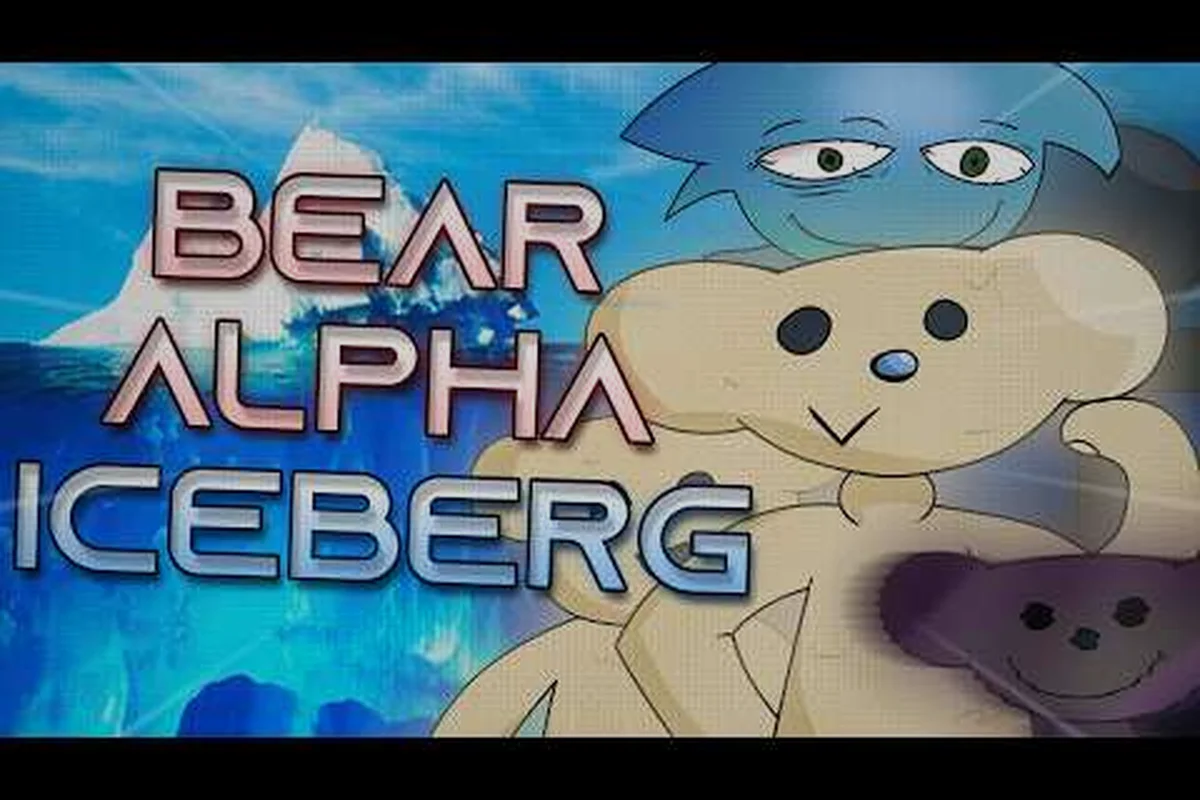
The bear alpha iceberg reveals layers of player-reported lore, creepy folklore, and possible hidden endings that are easy to miss. It matters because BEAR’s most unsettling details often live in ambiguous clues, radio messages, and environmental references rather than explicit explanations.
Bear Alpha Iceberg: Mapping the Layers of BEAR Lore
The bear alpha iceberg is best treated as a map of BEAR’s strange material rather than a literal official chart. Because BEAR has no comprehensive official wiki, many details come from player observation, community videos, and interpretations of radio messages, map objects, and enemy behavior.
| Iceberg layer | What players encounter | Evidence level |
|---|---|---|
| Surface | The Bear Alpha monster and ordinary survival gameplay | In-game observation |
| Middle | Radio fragments, unusual signs, and monster references | Player-reported |
| Deep | Hidden stories, ritual imagery, and Chromophobia theories | Community interpretation |
| Bottom | Secret endings and unresolved identities | Speculative |
This article’s bear alpha secrets are separated into confirmed observations, strong community theories, and unresolved ideas. That distinction prevents a dramatic interpretation from being mistaken for something developers have explicitly confirmed. For example, the Bear Alpha monster and its ordinary survival behavior belong to the Surface layer as in-game observation, while the Middle layer includes player-reported radio fragments and unusual signs. Deep-layer bear alpha creepypasta ideas, such as ritual imagery or Chromophobia connections, remain community interpretation; Bottom-layer bear alpha secret endings and unresolved identities stay speculative until an in-game source or developer statement supports them.
What “iceberg” means in BEAR
“Iceberg” describes how a community organizes material by certainty. The top layer contains visible systems and events. Beneath that sit details that exist in the game but lack a clear explanation. Deeper layers consist of theories built by connecting those details with older horror stories and later community creations.
The method matters because bear alpha hidden story ideas can sound equally convincing whether they come from direct gameplay evidence or from a fan-created story. A useful working method is to ask three questions: Is the detail visible in the current build? Does another source repeat it? Does the theory explain more than it assumes?
| Theory test | Strong sign | Weak sign |
|---|---|---|
| Direct observation | A readable object or repeated sound | One ambiguous silhouette |
| Cross-check | Multiple players describe the same clue | Only a creator repeats the claim |
| Explanatory value | Connects several details | Requires ignoring contradictory evidence |
| Current relevance | Reproduced in recent versions | Confined to an old upload |
The broader history of community-made horror material is covered in BEAR Alpha’s creepypasta history. That background is especially useful because some theories begin with BEAR imagery but grow through reworks, fan edits, and community retellings.
Bear Alpha Creepypasta: Official Myth and Community Horror
The bear alpha creepypasta tradition mixes the recognizable image of a large bear with themes commonly found in internet horror: isolation, pursuit, distorted communication, and unreliable narration. The game provides a foundation, but fan stories often extend beyond what can be verified from official material.
The official monster foundation
The Bear Alpha is the clearest confirmed anchor. Players encounter the monster as part of BEAR’s horror structure, but its motives remain intentionally unclear. That uncertainty allows community storytellers to assign different origins to it without contradicting a detailed official biography.
| Element | What can be confirmed | What remains interpretation |
|---|---|---|
| Bear Alpha | It exists as an in-game threat | Its origin and purpose |
| Radio communications | Messages add atmosphere and warnings | Who records every transmission |
| Dark environments | Darkness creates tension and danger | Whether darkness hides entities |
| Chase sequences | The monster threatens players | Whether it hunts by sound, sight, or something else |
| Endings | The game presents conclusion sequences | Whether every outcome is genuine |
A community explanation should identify exactly which row of the monster foundation it is discussing, because the confirmed evidence and the interpretive theory carry different weight. “The Bear Alpha exists” follows directly from its confirmed appearance as an in-game threat, whereas “the Bear Alpha is chasing a specific former employee” adds an unsupported motive. That theory may borrow details from the radio communications, chase sequences, or ending sequences, but each connection remains unconfirmed because the game’s official foundation lists the creature’s origin and purpose as unresolved.
How community stories expand the game
Community horror can deepen the sense of danger by adding a history, a victim, or a reason for the pursuit. These additions may be emotionally effective even when they are not canon. Their value depends on whether they clearly belong to fan interpretation rather than being presented as developer-confirmed facts.
Player-made videos such as DM4sterDL’s Bear Alpha iceberg explanation can serve as a map of what players discuss, though their claims should be treated as community interpretation. Likewise, Conordev123’s BEAR controversy iceberg illustrates how the community connects official myth, creepypasta history, and layered analysis.
Triangulation is a more reliable way to evaluate BEAR Alpha theories than citation volume. If a radio message, a map detail, and a recurring visual motif all support the same interpretation of the Bear Alpha hidden story, the connection becomes more persuasive because the evidence comes from separate systems. By contrast, a claim supported only by one dramatic video should remain labeled as community theory, especially when it implies a developer-confirmed secret ending or Easter egg.
Separating fan canon from in-game evidence
Three labels make the lore clearer: Observed covers details directly visible or audible in BEAR, such as a character’s movement, environmental animation, or an audio cue; Reported includes patterns repeated by multiple players or documented in a verified community video; Speculative marks creative interpretations that may inspire the bear alpha creepypasta and hidden-story theories but lack confirmation. This distinction matters for the bear alpha hidden story and potential secret endings: a chromophobia-based theory remains speculative until its visual or behavioral evidence is tied to an actual in-game sequence.
-
Observed: Directly visible or audible in the game.
-
Reported: Repeated by multiple players or presented in a verified community video.
-
Speculative: A creative explanation that may inspire storytelling but lacks confirmation.
This system also prevents circular sourcing. If one video repeats a wiki claim, and another video repeats that first video, the result is still one source rather than independent corroboration. Looking for the original in-game moment remains the strongest form of verification.
Bear Alpha Secrets Hidden in Maps, Radio, and Audio
Many bear alpha easter eggs work through repetition rather than exposition. A short message, an impossible object, or a recurring musical cue may appear briefly and then become meaningful when combined with another detail in a map, radio exchange, or audio track. Careful exploration matters because bear alpha hidden story clues often depend on noticing a changed visual, a repeated sound, or a location revisited under different conditions; missing one instance can make the larger pattern appear random.
Radio messages as narrative fragments
Radio messages can be treated like fragments from a damaged archive. Players should record their exact wording, delivery tone, location, and timing. A message heard before a pursuit differs in meaning from one heard after it, even if the words are identical.
| Observation | Possible function | Verification method |
|---|---|---|
| Repeating warning | Behavioral instruction | Compare every known occurrence |
| Broadcast outside its map | Global continuity clue | Document the map and timestamp |
| Voice changes after events | Character development | Compare pre- and post-event audio |
| Message contradicts scenery | Possible timeline split | Check geometry and lighting |
| New wording after updates | Changed or added content | Compare verified versions |
For broader context on radio-based storytelling, use BEAR Alpha’s radio-message lore overview as a companion rather than a substitute for checking the game yourself. That distinction matters when tracing BEAR Alpha’s hidden story: a lore summary can suggest whether a transmission resembles a warning, spatial anomaly, or altered character state, but only in-game evidence can confirm the relevant map, timestamp, audio delivery, and surrounding geometry. Keep the overview as a hypothesis generator, then verify each radio message against the current BEAR Alpha build, documented update differences, and any suspicious chromophobia-related visual changes before treating it as a confirmed secret or secret ending clue.
Environmental details that reward inspection
Environmental secrets often rely on placement. Look for objects that appear in otherwise empty rooms, doors that seem to serve no purpose, and pathways that lead toward the Bear Alpha rather than an ordinary exit. Repetition is a key signal because routine map furniture usually follows a consistent placement system.
Players can also compare the map’s difficult spaces with BEAR Alpha’s hardest map analysis. A location feels ominous because of how it structures movement, sightlines, and escape options, not merely because it contains a dark corridor.
A practical inspection routine includes taking a screenshot before interacting, checking whether a message repeats elsewhere, and recording whether the same object appears under different lighting. These steps are especially helpful when an update changes lighting, signage, or audio without drawing much attention.
The Chromophobia interpretation
The bear alpha chromophobia theory is one of the community’s most recognizable speculative threads. Chromophobia generally refers to an intense or irrational fear of color, so players connect it to BEAR’s dark scenes, missing colors, and moments in which vivid imagery appears to carry danger.
| Clue type | Chromophobia reading | Alternative reading |
|---|---|---|
| Unusually vivid color | A disruptive or forbidden signal | Rare environmental contrast |
| Darkness-heavy scenes | Evidence of color avoidance | Standard horror lighting |
| Color tied to the monster | The creature reacts to visibility | Common enemy readability |
| Missing-color endings | A symbolic transformation | Unusual visual variation |
Because there is no comprehensive official encyclopedia confirming the definition, this interpretation should remain labeled as theory. The game can inspire a reading without proving that the developers intended it. The strongest version of the argument identifies a repeated visual rule, while the weakest relies only on the fact that BEAR is dark.
Bear Alpha Easter Eggs and Clues That Reward Observation
Easter eggs are most useful when they are repeatable. A one-time visual gag may be entertaining, but a recurring placement or timing pattern can reveal how the developers construct the game’s lore. For example, repeated references to the Chromophobia threat can connect otherwise disconnected scenes, while repeated bear imagery may point toward the same hidden-story system. Players can compare encounter order, dialogue choices, and environmental changes across runs to distinguish deliberate clues from random noise; a pattern that survives multiple playthroughs is more likely to support a hidden ending than an isolated visual gag.
A repeatable clue-checking method
Start by recording the exact build or update whenever possible. Then note the clue’s location, the action that reveals it, and what changes afterward. Finally, compare notes with at least one other report. Community consistency is stronger than a single memorable impression.
| Step | Action | Record |
|---|---|---|
| 1 | Document the visible clue | Exact wording or appearance |
| 2 | Test surrounding interactions | Doors, radio, lighting, items |
| 3 | Compare map visits | Whether placement changes |
| 4 | Check repeated media reports | Consistent details and timestamps |
| 5 | Preserve uncertainty | Observation versus interpretation |
Cosmetics can sometimes mirror hidden themes, so the complete BEAR Alpha skins list may help players spot names or visual motifs that connect to the lore. However, an evocative skin is not automatically an in-game code for a secret ending.
Repetition, contrast, and silence
These principles turn apparent anomalies in BEAR Alpha into testable clues rather than decorative oddities: a repeated motif can reveal a hidden story, a sharp contrast can expose a secret ending pathway, and an unexpected pause can identify a concealed interaction. The key is comparison across scenes—checking whether the same radio behavior, color shift, or architectural mismatch recurs under different conditions. A detail earns more credibility when it changes how a route, encounter, or ending is understood, especially within bear alpha hidden story theories; otherwise, a striking visual may simply reflect the game’s surreal style.
-
Repetition: The same sound, shape, or phrase appears in different contexts.
-
Contrast: One vivid detail interrupts an otherwise consistent environment.
-
Silence: A normally active mechanic stops, making absence noticeable.
These principles are especially useful for analyzing bear alpha easter eggs without overclaiming. A quiet radio is meaningful if broadcasts regularly cover a similar location. A colored object is suspicious if nearby objects follow a strict monochrome palette. A secret door matters if the level’s architecture makes it look like a wall.
What counts as a hidden story
A hidden story should connect at least two parts of the experience. It may combine a sequence of radio messages with changing monster behavior, or pair an unusual environment with a final-scene detail. One image alone can support fan fiction, but a story claiming to reveal canon should show a chain of evidence.
Useful evidence chains include tracing how radio dialogue, environmental anomalies, and Bear Alpha’s reactions reinforce one another, then checking whether the apparent secret ending echoes those earlier details. This matters because a bear alpha iceberg argument is strongest when readers can separate a deliberate canon pattern from a coincidental creepy detail, especially when chromophobia imagery, the Alpha’s altered behavior, and recurring location cues all point toward the same interpretation.
-
A repeated message introduces a location.
-
The location contains an object associated with the message.
-
The Bear Alpha behaves differently near that object.
-
A later ending or scene reflects the earlier event.
That structure lets readers evaluate the argument without accepting the conclusion on atmosphere alone. It also distinguishes a genuine Bear Alpha hidden story from a fan interpretation assembled from unrelated imagery: the radio message must supply a testable location or rule, the chromophobia anomaly must reinforce that rule, and the secret ending must repeat the pattern rather than merely create a similar mood. If one link fails, the bear alpha iceberg argument remains evocative, but it cannot function as evidence for hidden canon.
Bear Alpha Secret Endings and the Deepest Lore Theories
The bottom of the bear alpha iceberg concerns outcomes and identities that remain difficult to classify, especially in BEAR Alpha’s ambiguous ending imagery and creepypasta interpretations. “Secret ending” may denote a genuinely alternate final scene, an Easter egg revealed after credits, a hidden identity for the protagonist, or merely a fan-made theory connecting anomalous frames and dialogue to the hidden story. Distinguishing these categories matters because symbolic imagery, such as color distortion associated with chromophobia, does not by itself confirm an alternate canon.
Different meanings of “secret ending”
| Category | Definition | Verification standard |
|---|---|---|
| Unlisted outcome | A distinct ending without prominent documentation | Must be reproduced in-game |
| Variant ending | Alternate visuals or lines in an existing conclusion | Version and conditions must match |
| Rumored ending | A story reported without clear reproduction | Requires independent evidence |
| Fan ending | Community-created continuation | Useful as interpretation, not canon |
| Hidden final scene | A brief sequence after the apparent conclusion | Requires timestamped footage |
This distinction prevents a compelling fan animation from being treated as a game conclusion. The bear alpha secret endings category is therefore best approached as a verification problem: locate the moment, document the conditions, and compare the footage with community reports.
Chromophobia and the identity of the antagonist
The deepest theories often combine the Bear Alpha’s visual design, color avoidance, and radio narrative into one explanation. A chart showing possible secret skins and titles may be worth checking alongside this theory, because cosmetics can reveal which names the community associates with the creature, though an appearance is not confirmation of identity.
| Deep theory | Supporting pattern | Remaining objection |
|---|---|---|
| The Bear Alpha rejects visible color | Vivid objects appear near danger | Could be ordinary horror contrast |
| Radio voices belong to earlier hunts | Messages repeat across eras | No confirmed speaker history |
| The monster remembers the player | Behavior changes after encounters | May follow ordinary patrol logic |
| A hidden identity replaces the monster | Ending imagery hints at a person | Requires an in-game reveal |
| Chromophobia explains the darkness | Color and visibility interact | Definition remains unconfirmed |
Evaluating theories without turning them into facts
Use three confidence labels in your own notes. Strong means several independent clues support the idea. Plausible means the interpretation fits a limited set of details but lacks confirmation. Creative means it enriches fan stories but lacks meaningful support from the game.
This approach does not make the theories less interesting. It makes the discussion more honest. The Bear Alpha works partly because players can project fear into gaps, and that participatory element remains valuable even when the creator never confirms a complete explanation.
What the Bear Alpha Lore Can—and Cannot—Prove
The bear alpha iceberg ultimately separates atmosphere from evidence. BEAR offers concrete monsters, environments, sounds, and endings, while its identity remains open to interpretation. A complete analysis should preserve that tension rather than force every clue into a single solution.
Evidence grades for future discoveries
When a new detail appears, record the date, game version, platform, and exact conditions. Compare it against earlier evidence before updating a theory. This method is especially important for dynamic games because lighting, spawn behavior, and map layouts can change between updates.
| Grade | Definition | Example |
|---|---|---|
| A | Directly reproducible in-game | A readable radio message |
| B | Consistently reported by multiple players | The same unusual map object |
| C | Supported by one credible source | A detailed video observation |
| D | Creative interpretation without direct support | A symbolic explanation |
| E | Contradicted by current evidence | A removed or changed detail |
The bear alpha secrets are most credible when a new discovery moves from D to C or B through repeated testing: for example, a cryptic radio message or unusual map object should be reproduced across separate sessions before it can support a larger bear alpha hidden story theory. This grading matters because a single ambiguous frame can reflect lighting, spawn behavior, or map-layout changes rather than an intentional easter egg. The goal is not to eliminate imagination, but to keep speculation tied to observable foundations and to label unresolved evidence honestly.
A balanced conclusion
After reviewing the layers, the most defensible conclusion is that BEAR deliberately uses unexplained horror fragments to make the Bear Alpha feel larger than its visible behavior. Radio messages, lighting, recurring imagery, and environmental oddities support a Chromophobia reading, although they do not confirm it as an official explanation. Likewise, reported hidden stories and alternate endings may enrich the lore, but only reproducible game moments establish canon.
That distinction keeps the bear alpha creepypasta tradition, the bear alpha hidden story theories, and the broader bear alpha secrets conversation meaningful. The next time a radio message repeats or a dark corridor feels wrong, document it precisely; a small clue can still deepen the entire iceberg.
Frequently Asked Questions
Is the BEAR Alpha iceberg based on official lore?
The bear alpha iceberg combines confirmed in-game observations with community theories. BEAR provides recognizable horror elements, monsters, radio fragments, and endings, but it does not have a comprehensive official wiki confirming every layer. The safest approach is to grade each detail by whether players can reproduce it, whether multiple sources report it, or whether it remains creative interpretation.
Does BEAR have confirmed secret endings?
Some players report unusual ending scenes or variants, but the available evidence does not establish a complete, officially documented list of bear alpha secret endings. A distinct in-game conclusion, an alternate sequence, and a fan-made ending are different categories. Verify claimed endings with timestamped footage and current-version gameplay before treating them as canon.
Is Chromophobia an official explanation for the Bear Alpha?
Bear alpha Chromophobia remains a community interpretation rather than a confirmed developer explanation. The theory connects the game’s recurring darkness, vivid colors, and pursuit imagery to fear or hostility toward color. It becomes more convincing when a specific visual rule repeats, but atmosphere alone cannot establish the creators’ intended explanation.
Where are the most useful bear alpha easter eggs to look?
The most reliable bear alpha easter eggs are details that repeat across maps, radio messages, lighting, or enemy encounters. Players should check unusual objects outside the normal path, compare repeated radio phrases, and record changes after major events. Consistent placement and multiple player reports provide stronger support than a single hidden image or ambiguous sound.