
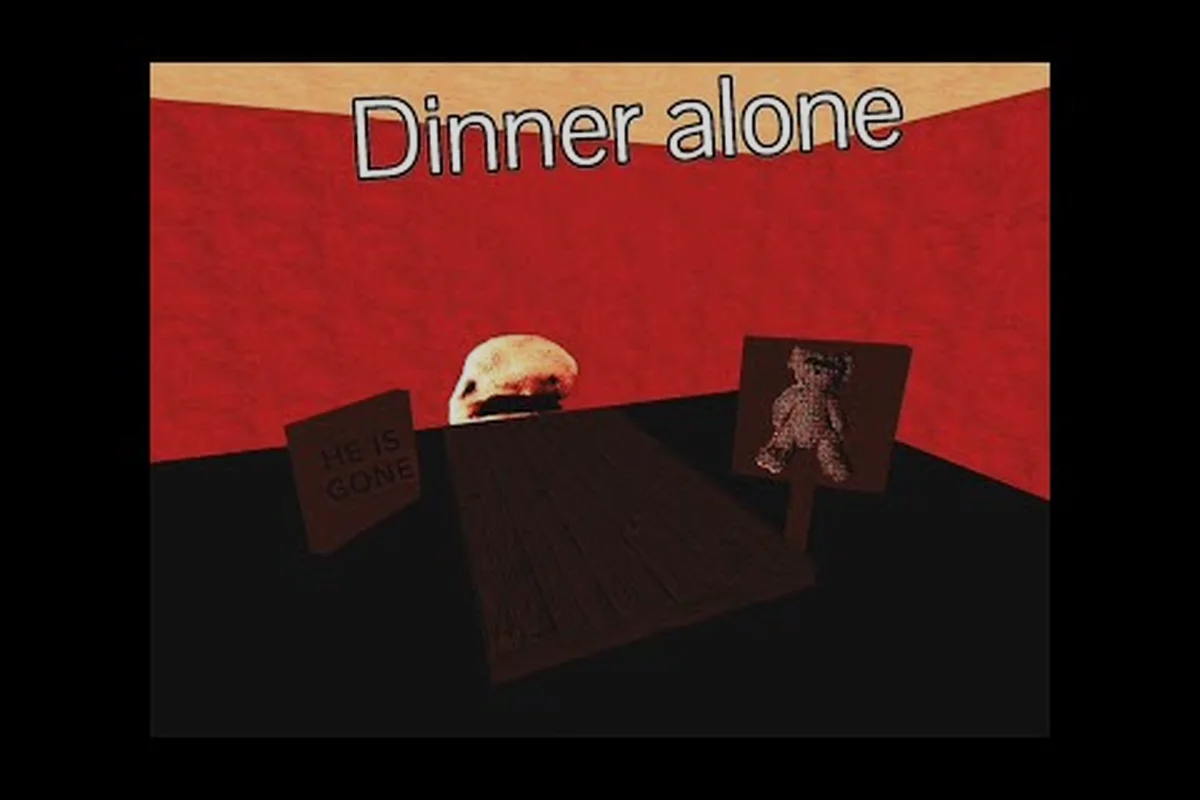
The history of the BEAR Alpha creepypasta begins with the game’s intentionally unstable evidence: damaged tapes, distorted radio messages, and environmental details that reward close observation. Fans linked these fragments to the Alpha creature, turning ambiguous dialogue and recurring sounds into a broader narrative. That legend grew through community interpretation, especially around radio transmissions and unexplained visual glitches, but the distinction matters: documented in-game clues can support a discussion of the story’s hidden meaning, while player-made theories remain speculation rather than confirmed canon.
The origin of BEAR’s error-image legend
The story usually associated with BEAR Alpha begins with an image that looked broken rather than deliberately designed. Because the defect appeared abnormal, players treated it as possible evidence of an intrusion. That reaction transformed a technical mistake into the foundation of a creepypasta mythology.
| Early element | Surface appearance | Community reading |
|---|---|---|
| Distorted game image | Visual corruption or error | A hidden scene leaking through |
| Unclear soundtrack | Repetition, distortion, or an abrupt change | A signal originating outside the normal game |
| Radio-style audio | Fragmented transmissions | The creature communicating with operators |
| Missing context | No explanation for the anomaly | Evidence that the official story omitted something |
| Shared recordings | Clips reposted by players | A growing archive of “proof” |
This is where the error-as-signal idea becomes important. In ordinary game development, corrupted visuals are defects. In horror fiction, a defect can imply forbidden access: the player is seeing something the developer never meant to display. That inference does not prove the image contains a real monster, but it explains why the earliest versions of the story spread so effectively.
The rise of the idea was also aided by format. A screenshot is quick to share, while a detailed explanation requires context. Players could crop out interface elements, preserve only the frightening portion, and discuss what the image “really” meant. The result was a narrative that expanded faster than its context. Community reports also treated later recreations as if they were the same original artifact, which makes an accurate history difficult.
A useful starting point is the game’s public identity rather than its deepest theory. The BEAR alpha for beginners guide covers the experience that generated the stories: tense objectives, environmental detail, and an atmosphere that rewards close observation. Those mechanics made ordinary errors feel ambiguous because players were already looking for threats in every shadow.
From broken media to community folklore
The transformation from “odd asset” to “creepypasta” did not happen in one moment. It followed a recognizable cycle: an unusual visual appears, players argue about its cause, a recording preserves it, and later audiences mistake the repost for primary evidence. Community reports indicate that short clips and reference compilations were especially influential in carrying the legend forward.
One verified example is Roblox BEAR (Alpha) – Creepy Game Error?, a player-produced video by LittleEmmettGaming. Its value is evidentiary rather than official: it shows how an error could be framed and circulated as horror content. The description and interpretation should not be treated as developer confirmation, because the available metadata provides community evidence, not a verified statement from BEAR’s creators.
The community’s story-making cycle
The same basic sequence appears in many versions of the account: a fragment from BEAR ALPHA—often the radio-message sequence or the distorted bear imagery—is isolated from gameplay, reframed as a transmission, and circulated under captions implying deliberate intent. Because no stable recording, timestamp, or original upload is preserved, later retellings cannot reliably distinguish the earliest clip from edited reposts, which is central to the uncertainty surrounding bear alpha radio messages and any claimed canonical interpretation.
-
A player notices an unusual image, sound, or interruption.
-
A recording captures only the alarming portion, sometimes before the full context is understood.
-
Commenters propose explanations, ranging from a joke asset to an intentional alien transmission.
-
The clip is reposted with increasingly confident captions.
-
New viewers encounter the edited version and interpret it as canonical.
The cycle is the core of the community amplification loop. Repetition adds apparent authority, even when each version removes the original context. A radio noise may begin as a brief gameplay effect, but once it is described as a “message,” subsequent listeners will hear it as intentional.
Evidence changes when stories travel
| Story stage | What the audience believes | What the artifact can actually establish |
|---|---|---|
| First recording | Something unusual occurred | A sound or image existed |
| Forum discussion | The event may be deliberate | Players connected it to a theory |
| Video compilation | The references form a pattern | Multiple community examples exist |
| Later retelling | The developer planned the mystery | No official confirmation is established |
| Seasonal discussion | The event predicts future lore | Interpretation remains speculative |
This distinction matters because a compilation titled All Roblox BEAR Alpha and BEAR* References and Songs can be valuable documentation without being a canonical source. The video demonstrates how songs, references, and eerie moments accumulated into a shared collection. Its “final” label reflects the creator’s catalog at that moment, not proof that the game’s mystery has a final solution.
Radio messages and the hidden meaning debate
Radio messages became central because sound is harder to contextualize than text. A corrupted image can be saved, cropped, and compared frame by frame. A transmission can be heard differently by every listener, especially when the signal is short, quiet, distorted, or mixed with ambient noise.
The available community video of the Tears Before Bedtime chase lore shows the sort of encounter presentation that encourages this kind of analysis. The chase itself may be a scene or challenge, while the radio-style presentation supplies the mood and encourages viewers to search for additional meaning.
What can reasonably be read from the audio
| Claim | Confidence | Reason |
|---|---|---|
| Strange audio is part of BEAR’s atmosphere | High | Multiple community examples reference songs, errors, and transmissions |
| Every noise is a deliberate message | Low | Game audio can be distorted, looped, or interrupted |
| Radio material hints at an outside observer | Medium | The presentation resembles surveillance or communication |
| The Monstrosity speaks directly to players | Low | A synthesized voice or repeated cue does not prove direct speech |
| Every reference belongs to one narrative | Low | Compilations may mix updates, events, jokes, and unrelated assets |
The strongest hidden meaning is thematic rather than linguistic: BEAR repeatedly asks players to interpret incomplete information. A radio message that never resolves suggests that the operator or player cannot control what is being received. That theme fits the wider story explored through BEAR Alpha decoded hints and cryptic clues, where poster details, terminology, and environmental signals are compared rather than treated as unquestionable answers.
A sound-first analysis method
To investigate without turning every hiss into a prophecy, separate the recording into four layers: first isolate the original BEAR Alpha radio message from later narration or fan edits, then preserve its exact playback position within the scene; next, compare the recovered audio with the surrounding interaction, including any nearby dialogue, objective prompt, character response, and environmental cue that may have triggered the transmission; finally, transcribe only the words that can actually be heard and list alternative readings without elevating the most dramatic interpretation into fact. This layered workflow matters because a shortened clip, altered gain, or missing full-scene context can make ordinary radio static resemble an intentional hidden message.
-
Source layer: Identify the original clip, date, and whether the radio sound is present in the full scene.
-
Context layer: Note nearby actions, objectives, characters, and environmental triggers that may explain the cue.
-
Language layer: Transcribe only clearly audible words and mark uncertain syllables as uncertain.
-
Interpretation layer: Write possible readings without presenting the strongest one as confirmed fact.
This method preserves ambiguity without surrendering evidence, while also limiting how far confirmation bias can distort the BEAR Alpha radio messages. For example, a clipped syllable resembling a name or warning should be checked against the full-scene radio transmission, nearby dialogue, objective prompt, and environmental cue before it is treated as a hidden message. If the same phrase can be produced by static, speech overlap, or the game’s intended BEAR Alpha dialogue, those alternatives remain part of the conclusion; the issue is not whether players can imagine a meaning, but whether the recording supports that reading any better than the competing ones.
A BEAR deep dive through repeating imagery
Looking across the lore as a whole reveals recurring patterns: error screens, distorted media, radio communication, unsettling songs, and a threatening creature that may be connected to the game’s larger mythology. The important point is not that every motif points to one answer, but that repetition makes the player expect a hidden system.
The media-corruption motif suggests that BEAR’s world is unstable. The surveillance motif, represented by radio and operator language, suggests observation from a distance. The monster motif gives that instability a physical threat. Together they create a story in which information itself becomes dangerous.
| Motif | Surface function | Possible narrative implication |
|---|---|---|
| Error imagery | Breaks immersion or changes a scene | The boundary between layers of reality fails |
| Songs and repeated audio | Builds tension and signals an event | A pattern persists despite attempts to reset it |
| Radio transmissions | Provides warnings or atmospheric commands | Someone outside the playable area is communicating |
| The Monstrosity | Functions as a threat or chase target | The corruption has an agent with intent |
| Missing context | Leaves the player uncertain | The recorded event has been censored or lost |
For a wider model of how these fragments connect, the BEAR Alpha iceberg explained separates surface-level details from deeper interpretations. That distinction is essential because a monster chase may be a direct gameplay event while an older error image remains only a community recollection. The former has an observable context; the latter often has none.
The difference between atmosphere and hard evidence
Evidence should be graded by how directly it supports a conclusion. A visible monster in the current game is stronger evidence that a creature exists than an anonymous clip of distorted audio. Likewise, a radio cue heard during a specific event is stronger evidence of an intentional communication device than a song fragment reposted without its source.
| Evidence tier | Example | What it supports |
|---|---|---|
| Direct | A monster appears during an active scenario | The creature exists within BEAR Alpha |
| Corroborated | Multiple records show the same radio phrase in the same context | The phrase appears to be intentional and repeatable |
| Suggestive | An error image is discussed in relation to the Monstrosity | A thematic association exists |
| Anecdotal | A player remembers hearing a phrase from the radio | Useful leads requiring verification |
| Speculative | A title or fan edit implies a larger conspiracy | An interpretation rather than a verified fact |
This hierarchy supports a claim-evidence-limit method. Every claim should identify the strongest supporting observation, then state what that observation cannot prove. It produces a more precise history because it records both the game’s visible content and the mythology that grew around it.
BEAR story explained 2026 through the player experience
In 2026, BEAR Alpha’s story cannot be reduced to a single viral clip or one hidden ending. The current experience combines gameplay horror, environmental storytelling, named references, event material, and years of community interpretation. A reliable explanation needs all four layers, with official material carrying more authority than fan summaries.
| Lore layer | What belongs here | Best source of support |
|---|---|---|
| Current game narrative | Objectives, characters, creatures, and events | Direct observation and official descriptions |
| Historical context | Earlier builds, removed content, and older recordings | Version records and archived player reports |
| Community mythology | Creepypasta, theories, and symbolic readings | Community reports, clearly labeled as interpretation |
| Interpretation | Thematic conclusions and hidden meaning | Analysis based on the preceding evidence |
The practical challenge is that “older” does not automatically mean “older than a particular theory.” Community clips can be mislabeled, and a modern upload may depict an old scene. Dates therefore need care. Compare the recording, the content inside it, and the version of the game that produced it before placing an event on a timeline.
Rebuilding the story without repeating false certainty
A careful four-pass reconstruction prevents myths from becoming history by accident: a viral radio message may mix genuine Bear Alpha footage with an edited audio cue, while a monster sighting can reflect a normal alpha encounter rather than the supposed anomalous state. By testing timestamps, upload provenance, scene continuity, and dialogue against the game’s environment, objectives, and monster behavior, historians can distinguish an authentic anomaly from repetition, compression artifacts, and later community retellings.
-
Pass one: inventory the artifact. Record the video title, uploader, description, and visible content without interpreting it.
-
Pass two: establish provenance. Determine whether the creator performed the scene in-game, compiled references, or restored older footage.
-
Pass three: separate recurrence from repetition. A recurring sound in the same context may be deliberate; the same clip posted repeatedly proves only that it was reposted.
-
Pass four: compare against current game evidence. Check whether the monster, location, objective, or language still appears in the playable experience.
This approach explains why the story explained 2026 differs from older community summaries. The underlying mystery may remain unresolved, but the evidence base includes more firsthand recordings, more comparative footage, and greater awareness that errors can alter how older clips are interpreted.
Community theories compared with observable clues
Community theories are valuable when they organize observations into a coherent framework, especially because BEAR’s radio messages, recurring monster cues, and visual corruption can make isolated incidents appear connected. They become misleading when that framework outruns the facts: for example, interpreting a voice before a chase as a warning requires more evidence than noting that the radio cue and the Monstrosity encounter occurred together. The table below compares common approaches without assigning them an unsupported “correct” status.
| Theory or interpretation | Supporting pattern | Main limitation | Best confidence level |
|---|---|---|---|
| The error is an intentional hidden scene | Errors recur around monster-related events | No official confirmation of intent | Suggestive |
| Radio voices guide or deceive players | Repeated radio cues accompany dangerous sequences | Noise and editing can imitate speech | Medium |
| BEAR contains layers of reality | Corruption and visual breaks feel layered | “Layers” may be symbolic rather than literal | Suggestive |
| The Monstrosity predates the operators | Lore suggests an older threat | Timeline details are incomplete | Low to medium |
| Songs act as monster cues | Music and chases share memory across the community | Compilations may mix unrelated scenes | Medium |
| Every reference belongs to one ending | Numerous clues appear connected | Hidden endings remain disputed | Low |
One reason theories spread is that they reward pattern recognition. A player who notices that the radio sounds more urgent before a chase can make a useful observation, but the observation becomes a theory when it adds an intended cause. The community amplification loop then makes cautious language sound less necessary as the story gets retold.
The BEAR Alpha story and community theories compared can help readers examine those claims against surrounding evidence. The better method is not to dismiss every fan interpretation, but to ask whether the interpretation predicts something observable that has not yet been checked.
Testable predictions
Strong theories often produce predictions. A theory that says radio audio warns of danger should imply that the cue appears before comparable threats without a cue. A theory about an older monster should point to environmental evidence predating the player’s role. A theory about deliberate error scenes should identify a repeatable trigger.
| Prediction | Verification method | Useful outcome |
|---|---|---|
| A radio cue precedes danger | Compare matched rounds with and without the cue | Supports or weakens the warning theory |
| Error scenes repeat at one location | Revisit that location under similar conditions | Tests intentionality |
| A symbol links separate events | Compare posters, maps, and environments | Builds a motif map |
| Older footage matches a current asset | Match frames, audio, and objectives | Clarifies version history |
| The Monstrosity has a separate origin | Search for pre-expedition references | Tests the expanded timeline |
Players can apply these checks without treating the work as a formal investigation: record the round number, location, nearby radio messages, and whether the Monstrosity appears after the cue. For example, if the same warning precedes an attack in multiple sessions but follows the attack in others, the evidence weakens the radio-warning theory. Likewise, comparing the Monstrosity with pre-expedition footage can distinguish an intentional origin from a reused asset, while a repeatable error-scene trigger may indicate deliberate design rather than ordinary map behavior. The value lies in replacing an endless chain of retellings with a sequence of observable questions.
What remains confirmed, hidden, and unresolved
The history of BEAR Alpha’s creepypasta can end without pretending that every mystery has an answer. Some elements are directly observable, some are strongly suggested, and others remain community interpretation. Keeping those categories separate is the most responsible way to summarize the lore.
| Status | Conclusion | Reason |
|---|---|---|
| Confirmed | BEAR uses unsettling error imagery and atmospheric media | Directly represented in community gameplay records |
| Confirmed | Radio-style and musical cues are part of the experience | Multiple player videos document them |
| Confirmed | The community built a creepypasta around the Monstrosity and media anomalies | Repeated references and compilations |
| Strongly suggested | Some errors may have been deliberately designed | Recurrence and thematic placement |
| Unresolved | Whether every early “proof” came from an actual in-game event | Some clips lack full context or provenance |
| Unresolved | The complete origin and purpose of the Monstrosity | No single source establishes a full explanation |
| Unresolved | Whether all references point toward one hidden ending | Interpretations remain divided |
The final takeaway is that BEAR’s creepypasta history is not a single hidden story waiting to be decoded. It is a layered cultural record: the game supplies horror cues, technical mistakes invite projection, and players preserve both in clips, essays, and theories. The error-to-legend pipeline explains its greatest power, because every surviving reference can feel like a fragment of something larger even when its original context remains uncertain.
Frequently Asked Questions
Is BEAR Alpha based on a real creepypasta?
There is no verified evidence that BEAR Alpha adapts one specific pre-existing creepypasta. Its atmosphere draws on familiar internet-horror devices, including corrupted imagery, radio warnings, ominous songs, and a hidden creature, while community videos show players organizing those elements into a mythology of their own.
Did developers intentionally create BEAR Alpha’s creepypasta errors?
Intent remains uncertain because older errors can resemble deliberate secrets, especially when recordings are cropped or reposted without context. The best evidence is recurrence under comparable conditions, and player reports sometimes suggest that certain anomalies are intentional. No single verified source confirms every famous example.
What do BEAR Alpha radio messages actually say?
The radio messages are often fragmented, distorted, or mixed with other sounds, so clear transcripts are rare. Players have reported warnings, unexplained phrases, and sounds resembling calls or replies. The strongest interpretation is that they create an external signal, while any specific decoded message should be treated as provisional unless its source context is verified.
Does the BEAR Alpha hidden meaning confirm an alien or alien-monster origin?
Not conclusively. Alien imagery, anomalous media, and the Monstrosity can support that interpretation, but they do not establish an official extraterrestrial origin. The lore remains compatible with several explanations, including artificial surveillance, a failed experiment, dimensional corruption, or deliberately nonliteral horror symbolism.
Which source is best for the actual BEAR Alpha creepypasta history?
Primary game observation is best for confirming what appears on screen, while archived uploads are useful for tracing older discoveries. Community compilations reveal how the legend grew, but they may mix dates or interpretations. The BEAR Alpha versus BEAR* lore comparison adds useful context by distinguishing official versions and community explanations.